

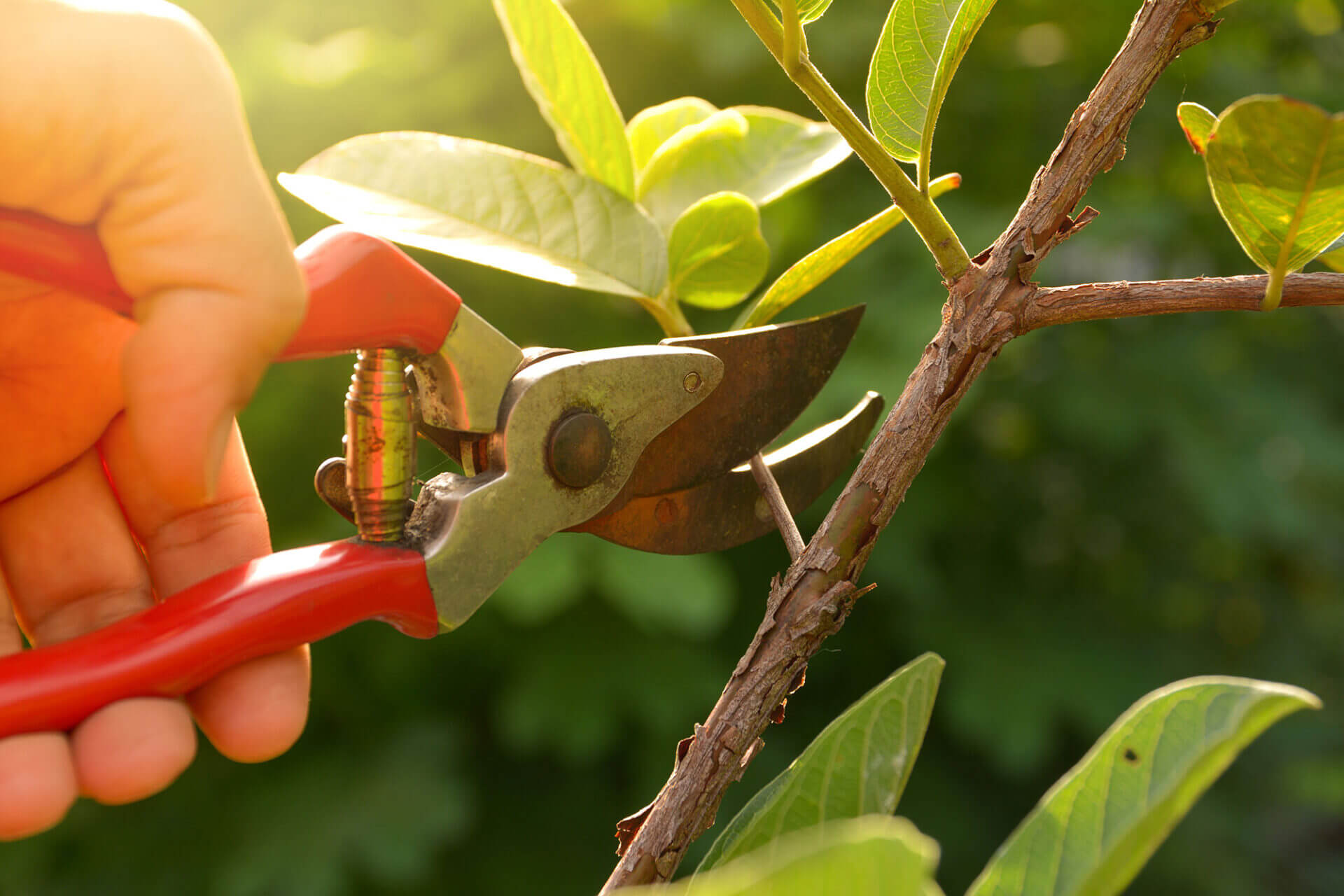
A question we hear a lot from our clients is “when is the best time to prune trees or shrubs?” For the most part, we at Riverfront Landscape recommend pruning during the late winter to early spring months. Trees and shrubs that thrive in temperate regions tend to go dormant during winter. During the cold months, the trees and shrubs tend to hunker down, and active growth halts.
As such, most of us intuitively assume that winter is the best and safest time to prune our plants. However, a better approach to pruning your trees and shrubs is to consider the age, species, and health condition of your plants. With this in mind, the more accurate answer to the aforementioned question is “it depends.”
There’re instances when pruning during the summer months is more prudent and will undoubtedly yield better results.
Variety Of Plants That Will Thrive With Early Summer Pruning
You should prune spring-flowering shrubs in late spring or early summer, right after the plant flowers, and before new buds emerge. Notable examples of such plants include climbing and shrub roses, viburnum flowering quince, Andromeda, lilac, mock orange, forsythia, and rhododendron.
Reasons You Should Prune During Summer
There are many reasons to prune plants in the summer. These reasons include:
#1. Pruning the plant when it’s fully leafed out to have better visuals of the impact of pruning on its overall shape and structure.
#2. Controlling the growth of trees/shrubs that have grown too large, too fast, or are getting in the way. Shoots that grow too quickly tend to have a suckering effect, which will inadvertently affect the plant’s overall health. On the other hand, you can use summer pruning to encourage vigorous growth of
#3. Pruning in the summer also allows botanists to open up the tree crowns, thereby increasing sunlight and air circulation throughout the interior. Better sunlight penetration and air circulation are particularly effective in helping your fruit trees produce better quality and sweeter fruits.
#4. Raising the tree canopy to open up a view.
#5. You can conduct summer pruning as a pest control measure. Removing damaged, dead, or diseased leaves and branches from among healthy foliage will curtail the spread of an infestation.
Until the plant fully leafs out, there may be some underlying health issues that may not be obvious or cannot be seen. Additionally, such problems will persist throughout the growth cycle of your tree if not dealt with during the summer. Dead, damaged, or diseased branches and trees should be removed the earliest you first notice them, even in the middle of summer.
PRO TIP: One of the more notable risks of pruning trees and shrubs during summer (the growing season) is the increased risk of pests or pathogens infiltrating the plants through the resulting open pruning wounds. This risk is especially prevalent for trees that are actively infested with insects, oak wilt ailment, or the Dutch elm disease is present. You should talk to a tree care professional before pruning such a plant. They have a better understanding of how to prevent disease infestation.
We Do All The Work So You Don’t Have Too!
As a full-service landscaping company, serving both commercial and residential clients, Riverfront Landscaping excels in the provision of a variety of landscaping services. If you’re in need a landscaping company this season to help you out with your summer running, call or contact Kyle at Riverfront Landscape.