

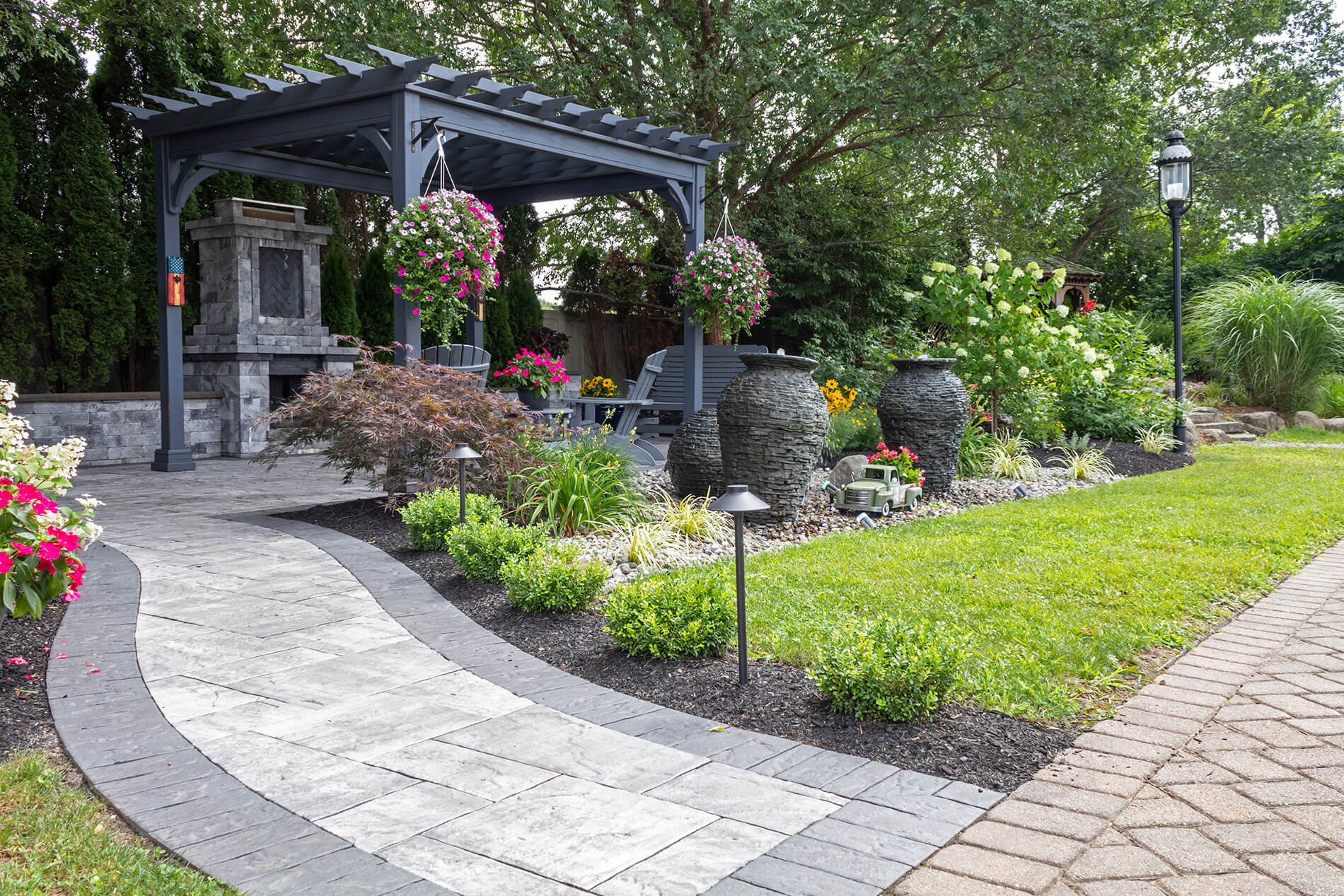
If you’re staring at a tired, splintering deck and wondering whether it’s worth fixing one more time, you’re not alone. Many Sherborn and Natick homeowners are choosing to replace old wood decks with low-maintenance paver patios that look great, feel solid underfoot, and work better with the way families actually live outside.
Riverfront Landscape has helped homeowners all over MetroWest make this exact transition—from aging deck to beautiful new paver patio. Before you decide what to do with your old deck, here’s what you should know.
Is Your Deck Ready to Be Replaced?
Before dreaming up a new outdoor space, it’s important to be honest about the condition of your existing deck. Some issues can be repaired, but others are strong signs it’s time for a full replacement.
1. Visible Rot and Soft Spots
If your deck boards, railings, or support posts are soft to the touch, discolored, or crumbling, rot has started to take hold. This isn’t just a cosmetic problem—rot can compromise the structure and make the deck unsafe.
2. Wobbly Railings or Loose Connections
Handrails that move when you lean on them or posts that shift are red flags. Over time, fasteners rust, connections weaken, and the structure can drift out of code.
3. Cracked, Warped, or Splintered Boards
Sun, rain, snow, and winter freeze–thaw cycles take a toll. If your deck is full of warped boards, nail pops, and splinters, it becomes less comfortable to walk on—and more work to maintain.
4. Layout That No Longer Fits Your Life
Even if the deck is technically “sound,” it may not fit how you use your yard today. Maybe it’s too small for entertaining, blocks your view, or creates a steep drop with multiple steps down to the lawn.
If you’re seeing one or more of these signs, it’s the perfect time to consider all your options—including a ground-level paver patio.
Why Many Homeowners Are Choosing Low-Maintenance Paver Patios
When homeowners in Sherborn, Natick, and surrounding towns call Riverfront Landscape about their old decks, they’re often surprised by how many benefits a paver patio can offer.
Less Maintenance, More Enjoyment
Wood decks need regular staining, sealing, and board replacements. A properly installed paver patio is much easier to live with: occasional sweeping, rinsing, and joint sand touch-ups are usually all that’s required.
Long-Term Durability
Pavers are designed to stand up to New England weather. If one ever chips or stains, it can be replaced individually—no tearing out an entire surface.
Flexible Design and Layout
Paver patios can be curved, squared off, or blended into existing walkways and planting beds. You’re not locked into a single size or shape like many deck footprints.
Safer, More Comfortable Transitions
A ground-level or gently stepped paver patio offers smoother transitions from house to yard. That means fewer stairs, safer movement for kids and guests, and a more natural flow out into the lawn or garden.
Paver Patio vs. Wood Deck: Structural Differences That Matter
Understanding how paver patios are built—versus how decks are framed—helps explain why they feel so solid.
Built on a Compacted Base
A paver patio starts with excavation and a carefully compacted base of crushed stone. This stable foundation is designed to drain well and resist movement from freeze–thaw cycles. Pavers are then laid on a sand setting bed and locked in place with edge restraints and joint sand.
No Elevated Structure to Maintain
With a deck, you have posts, beams, joists, and fasteners to worry about—plus the boards on top. Over time, wood can rot, metal can rust, and the entire frame may need replacement. A paver patio eliminates that elevated structure.
Impact on Views and Yard Flow
Decks tall enough to walk under can create shaded, unused space beneath them. A paver patio sits low to the ground, opening up your yard and views, and making it easier to blend hardscape with lawn, gardens, and play areas.
Your Options: Keep a Small Deck, Add a Paver Patio, or Go All-In on Hardscape
Every property is different, and the best solution often combines more than one element. Here are common approaches we discuss with Sherborn and Natick homeowners.
Option 1: Keep a Compact Deck and Tie It Into a Lower Paver Patio
If your back door is several feet above grade, it may make sense to keep or rebuild a smaller landing-style deck. From there, wide steps or a landing can lead down to a spacious paver patio below.
Advantages:
- Safe, code-compliant transition straight out the door
- Lower paver area that feels connected to the yard
- Great for walk-out basements or homes with sloped lots
Option 2: Replace the Deck Completely With a Paver Patio
If your door is closer to ground level, or you’re tired of dealing with a bulky, high-maintenance structure, you may opt to remove the deck entirely and build a large paver patio in its place.
Advantages:
- Cleaner sightlines from inside the house
- More usable space for dining, lounging, and entertaining
- Easier to integrate with walkways, fire pits, or outdoor kitchens
Option 3: Phase Your Project
You don’t have to do everything at once. Riverfront Landscape can help you plan a layout that starts with a primary paver patio and leaves room for future features like a seating wall, grill station, or additional walkways.
Before and After: What Really Changes When You Switch to a Paver Patio?
It’s not just the look of your outdoor space that changes when you go from deck to pavers—it’s how the space works day to day.
Access and Flow
Before: A high deck with a narrow staircase limits how people move in and out, and can feel separated from the yard.
After: Wider steps, landings, or a near-level patio make it easier for guests to mingle between the house, seating areas, and lawn.
Furniture Layout and Usable Space
Before: Railings and tight corners can make arranging furniture a challenge.
After: A well-planned paver patio can accommodate dining tables, loungers, and conversation areas without feeling cramped.
Year-Round Maintenance
Before: Annual or bi-annual staining, board replacement, and constant eye on splinters and loose fasteners.
After: Quick cleanups in spring, the occasional re-sanding of joints, and spot repairs only if needed.
Long-Term Value
A properly designed and installed paver patio can enhance the overall look of your property and appeal to future buyers, especially in sought-after MetroWest towns like Sherborn and Natick where outdoor living space is a big plus.
Ready to Replace Your Old Deck? Talk to Riverfront Landscape
If your wood deck is showing its age, now is a great time to explore what a custom paver patio could do for your home.
At Riverfront Landscape, we:
- Evaluate your existing deck and yard conditions
- Help you choose the best combination of patio, steps, and possible small deck landings
- Design a layout that fits your lifestyle, budget, and property
- Handle the entire installation with professional equipment and an experienced crew
Call today or request a consultation online to start planning your deck-to-paver-patio transformation in Sherborn, Natick, and surrounding MetroWest communities.
Let’s turn that aging deck into a beautiful, low-maintenance paver patio you’ll enjoy for years to come.